An Old Dell and a Few Questions
How an experiment with free automation software turned into a Linux server, a growing collection of projects, and quite a bit of learning along the way.
It started because I wanted to experiment with automating some of my work.
I came across a tool called n8n that could connect different applications and automate workflows. It was free if I hosted it myself, which sounded appealing. I liked the price, anyway.
There was just one problem: I didn’t know how to host anything.
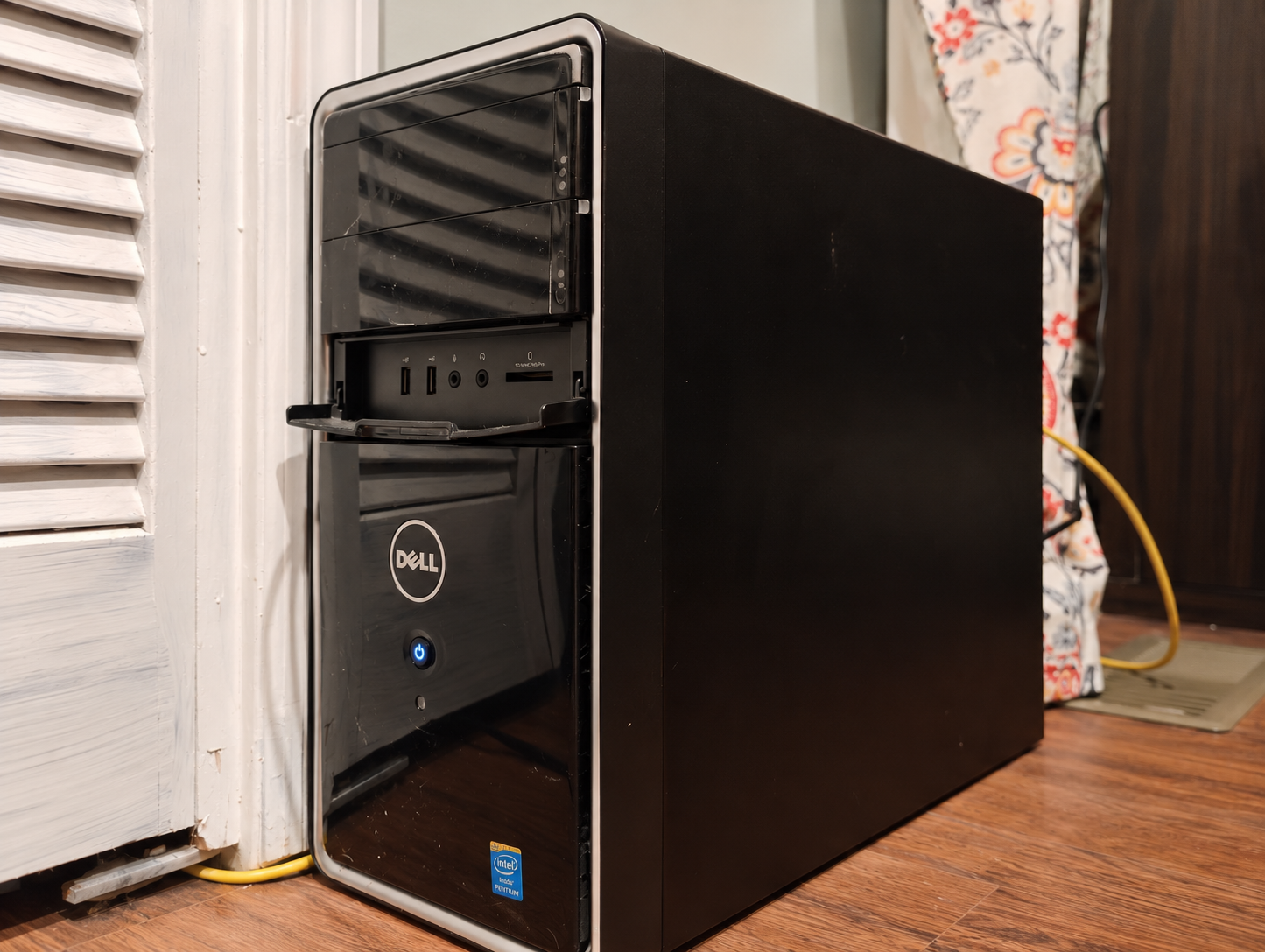
But I had an old Dell Inspiron desktop sitting around, and ChatGPT seemed to think I could turn it into a server. So I figured I’d give it a try.
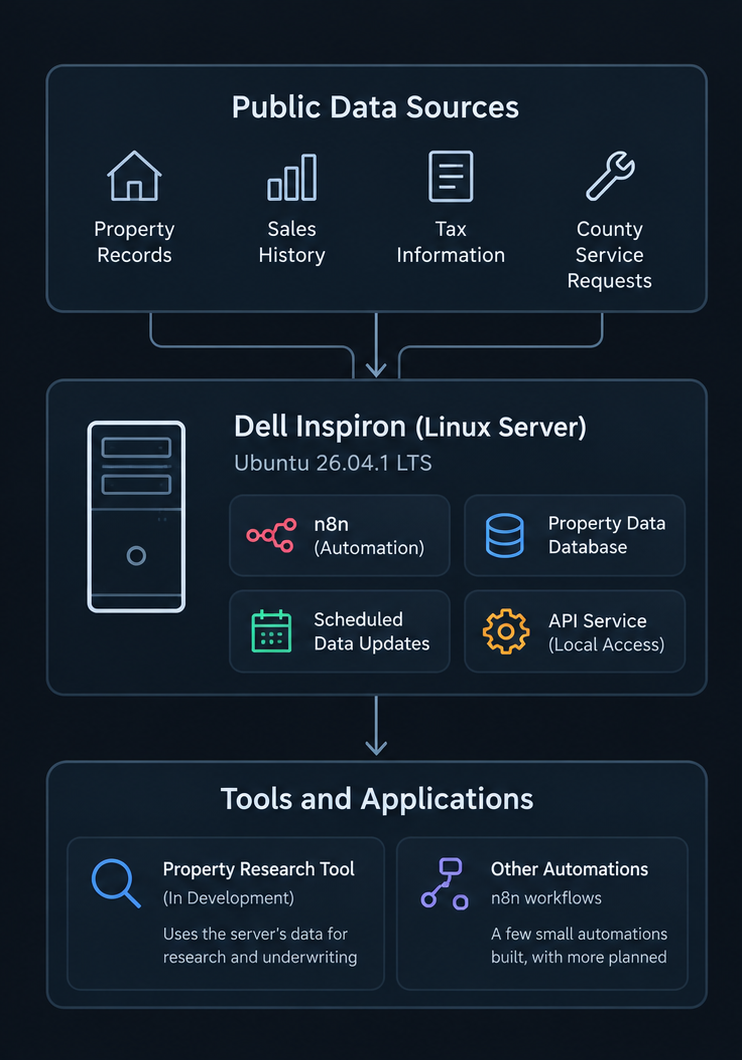
I installed Linux for the first time, learned how to connect to the computer remotely, and eventually got n8n running. I’ve since built a few small automations that actually work.
That was supposed to be the project.
It didn’t stay that way.
A little more than automation
Once I had a working server, I started wondering what else I could do with it.
I’m involved in real estate, and I’ve been interested in finding better ways to work with public property records, sales history, tax information, and other useful data.
The computer now runs Ubuntu Linux and supports a local property database, scheduled data updates, and development work on a separate property research and underwriting tool.
It’s not exactly a powerhouse. The Dell has a dual-core Intel Pentium processor, about 4 GB of RAM, and hardware dating back to 2014.
But it’s doing things I wouldn’t have imagined attempting with it not very long ago.
An AI-assisted learning curve
I haven’t suddenly become a Linux administrator or software engineer.
ChatGPT helps me think through what I want to accomplish, understand unfamiliar concepts, and figure out what to try next. Codex helps write code, configure services, troubleshoot problems, and test whether things are working.
I’m still responsible for deciding what I want the system to do, evaluating the results, and figuring out whether what we’ve built is actually useful.
Sometimes I understand what’s happening. Sometimes I need to ask what a command does before I’m comfortable running it.
And sometimes I discover that getting something to work is considerably easier than understanding why it works.
One thing I’m learning is that AI can help me build things faster than I can fully understand them. That’s exciting, but it also means I need to be deliberate about testing, documentation, security, and not breaking something that already works.
Still experimenting
The server, which I’ve named ARGUS, is an ongoing project. I’ve gotten a little sidetracked from my original automation experiments while working on the property database, but I expect to return to building more workflows.
I’m also continuing to learn how to maintain the server, improve its reliability, and use it as a foundation for other projects.
I started with an old computer, a free software option, and very little technical knowledge.
I still have plenty of gaps in that knowledge. But I’m filling some of them as I go, and I’m finding that curiosity and a willingness to ask questions can get me quite a bit further than I expected.